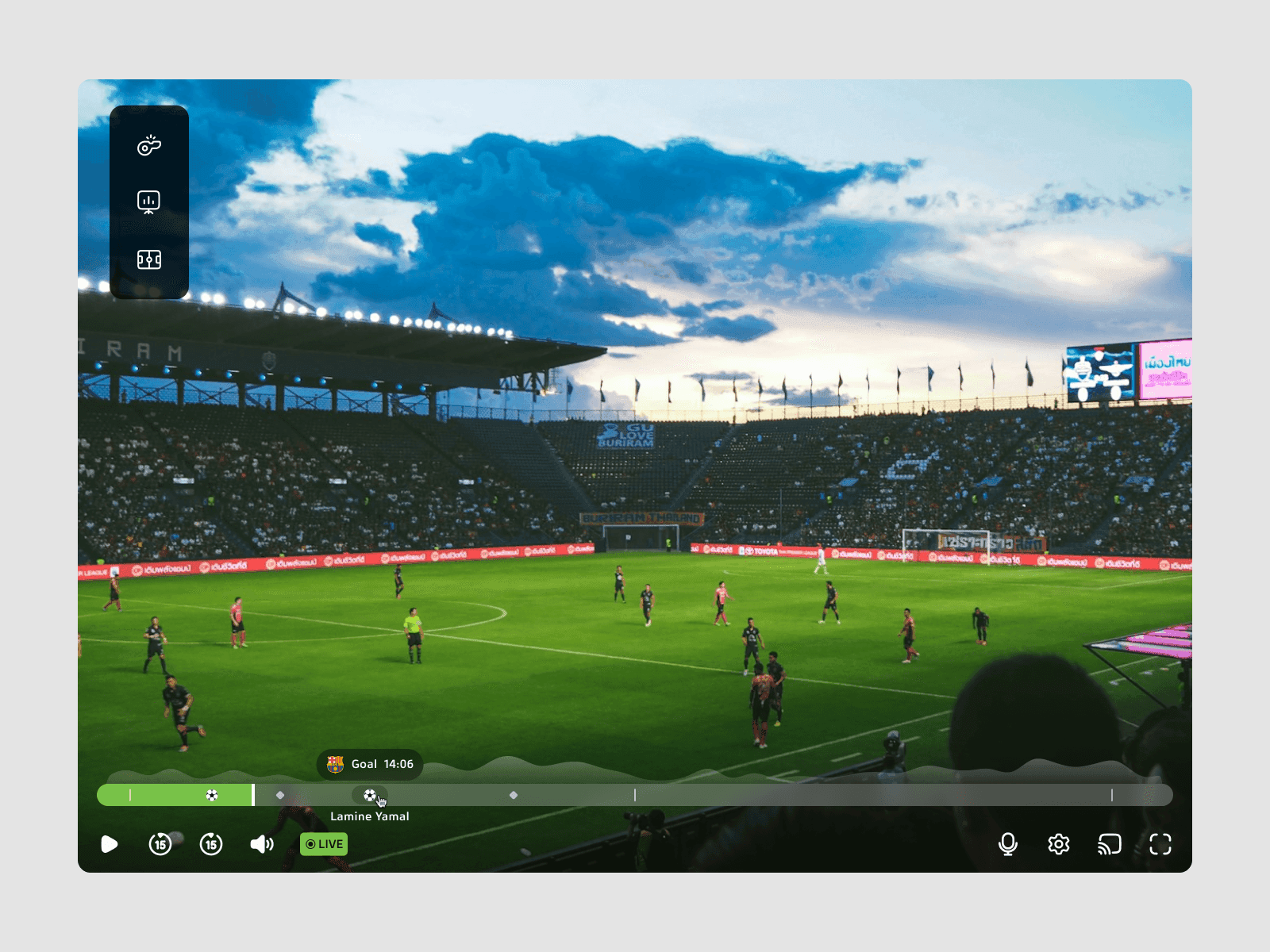
Designing Instahop: From Travel Search to Personal Journey
I designed Instahop to make travel planning more personal and efficient, helping users turn scattered research into a practical itinerary shaped by local knowledge.
- Period
- Sep 2026
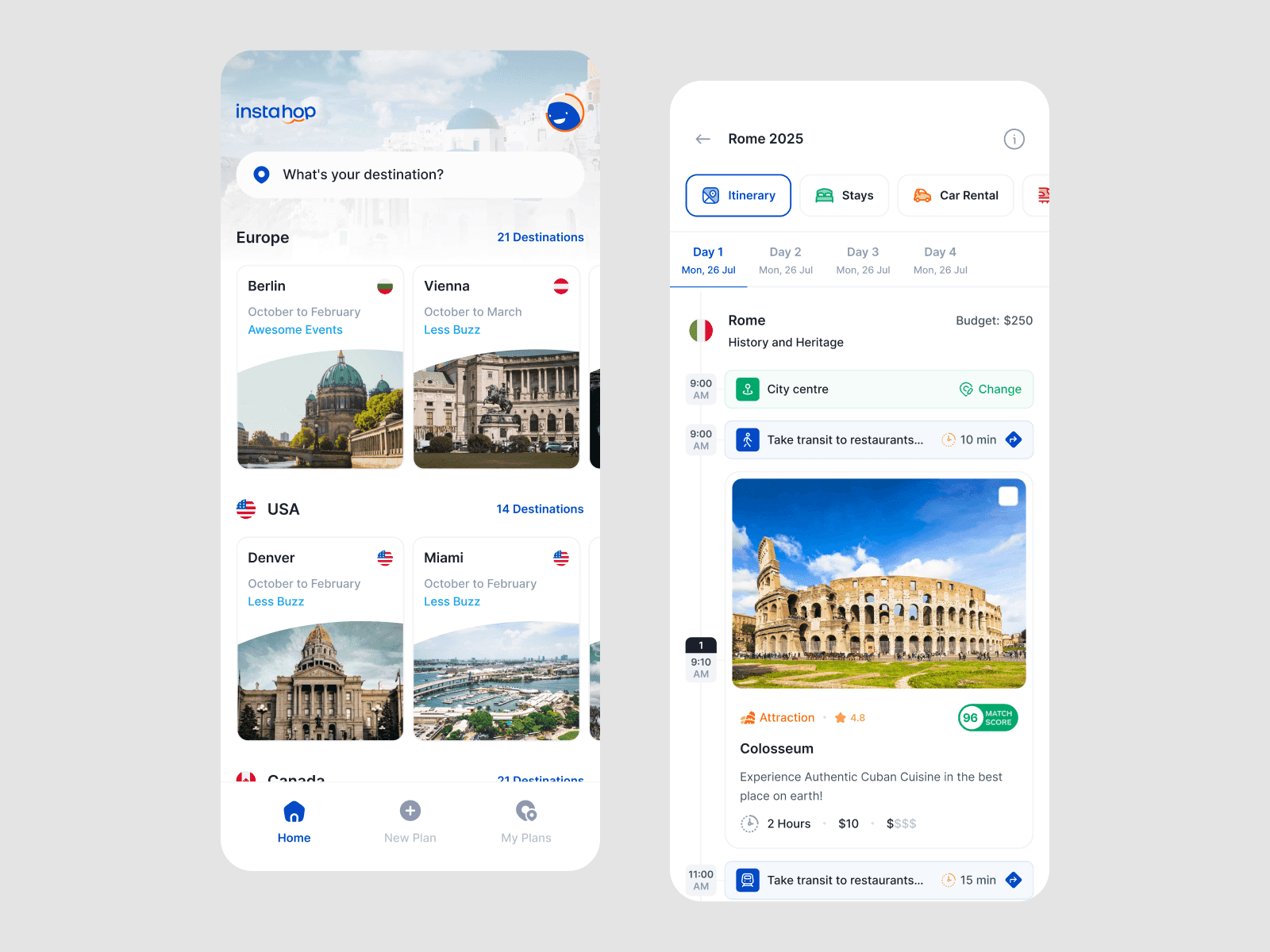
Results
- 25%
- Faster itinerary completion
- 9% → 12%
- Plan creation in the partner widget
Context & Goal
Before and during a trip, travelers often spend significant time searching for places to visit, activities to try, food to experience, and transportation to use. This information is usually spread across different platforms and sources, which can also lead to avoidable spending when routes, activities, and budgets are planned separately.
The goal was to bring these decisions into one guided experience and help travelers build a plan around their budget, interests, personality, group size, transportation options, and starting point, such as a hotel, airport, or another location.
Challenge
The challenge was not simply to show users more destinations or activities. It was to help them make better decisions with less research and effort, while keeping the plan flexible and personal.
Generic recommendations can also overlook the places that make a trip memorable. Instahop needed to surface hidden gems and local experiences without making the process feel overwhelming or automated.
Research & Insights
We looked at the travel-planning journey and the different decisions users make before and during a trip. The main friction was the amount of time spent comparing disconnected information across places, activities, food, transportation, budgets, and schedules.
Research by Go City and Talker Research found that travelers spend an average of 17 hours and 42 minutes per trip on research, price comparisons, bookings, and related planning. Nearly 3 hours and 54 minutes of that time is spent researching and booking experiences, cultural attractions, and excursions. The study also found that 44% of frequent travelers considered overspending their biggest planning pain point, with lodging, transportation, and meals among the main areas of concern. [Go City Consumer Survey]
The key insight was that travelers do not necessarily need more options; they need relevant options that fit their specific context and budget. Local knowledge was also an important part of the experience, since tour guides and local hosts could recommend places that travelers might not find through general search.
This shifted the design direction from creating another travel search tool to building a human-guided planning experience around each traveler’s real needs.
Hypotheses
We hypothesized that a guided and personalized planning flow would help travelers make decisions with less effort and more confidence.
- Starting with destination, dates, group size, and starting point would create a clearer planning context.
- Recommendations based on preferences and budget would feel more useful than generic activity lists.
- Bringing discovery and itinerary building into one flow would reduce planning time and friction.
- Local recommendations and hidden gems would make the experience feel more authentic and memorable.
- Including food, drinks, transportation, and personality preferences would make plans feel more personal.
Solution
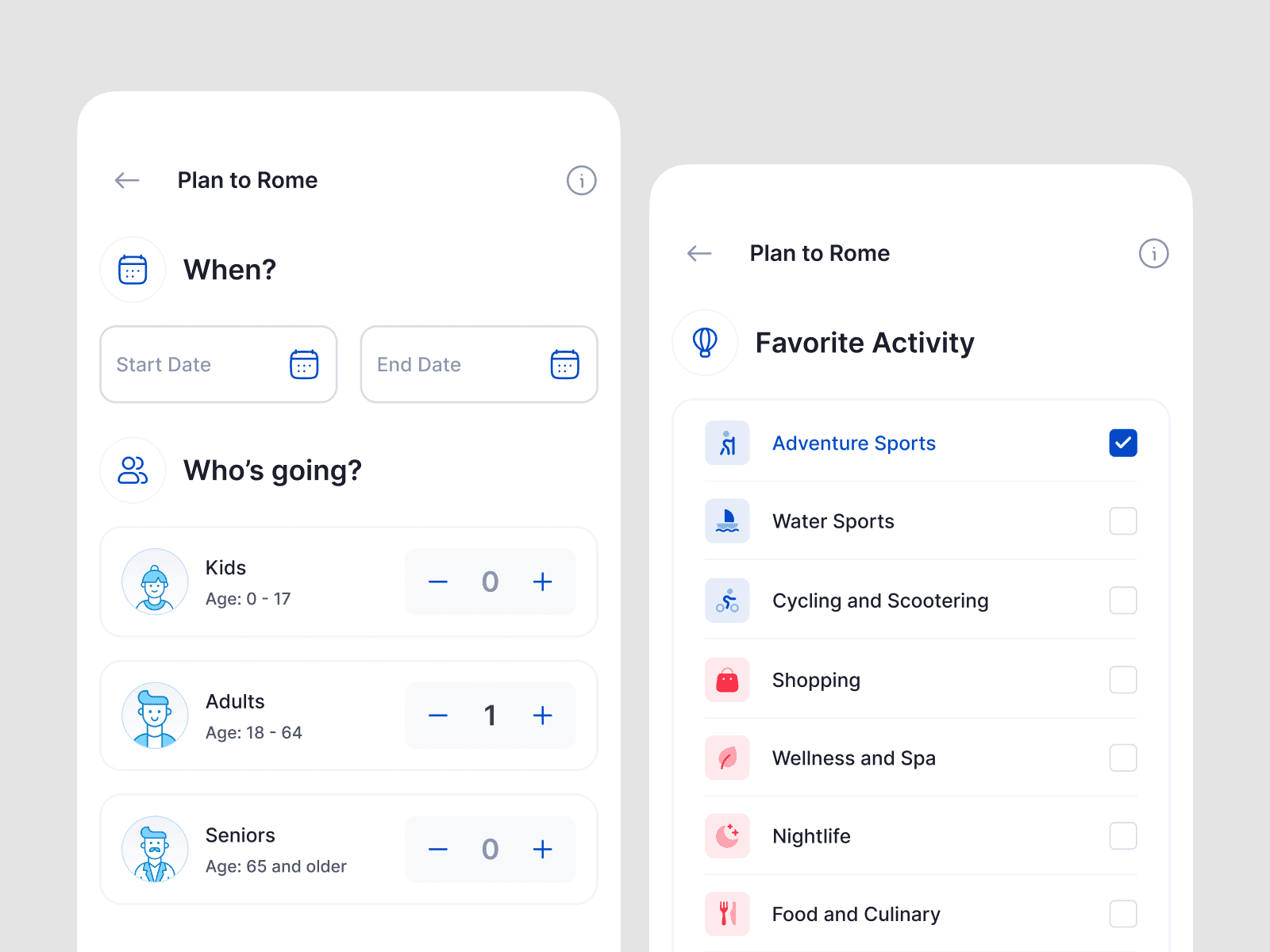
Instahop was designed around a guided flow that turns trip details into a personalized travel plan.
- Users define their destination, dates, group size, budget, and starting point.
- Preferences such as food, drinks, personality, and transportation shape the recommendations.
- Local hosts and tour guides contribute relevant experiences and hidden gems.
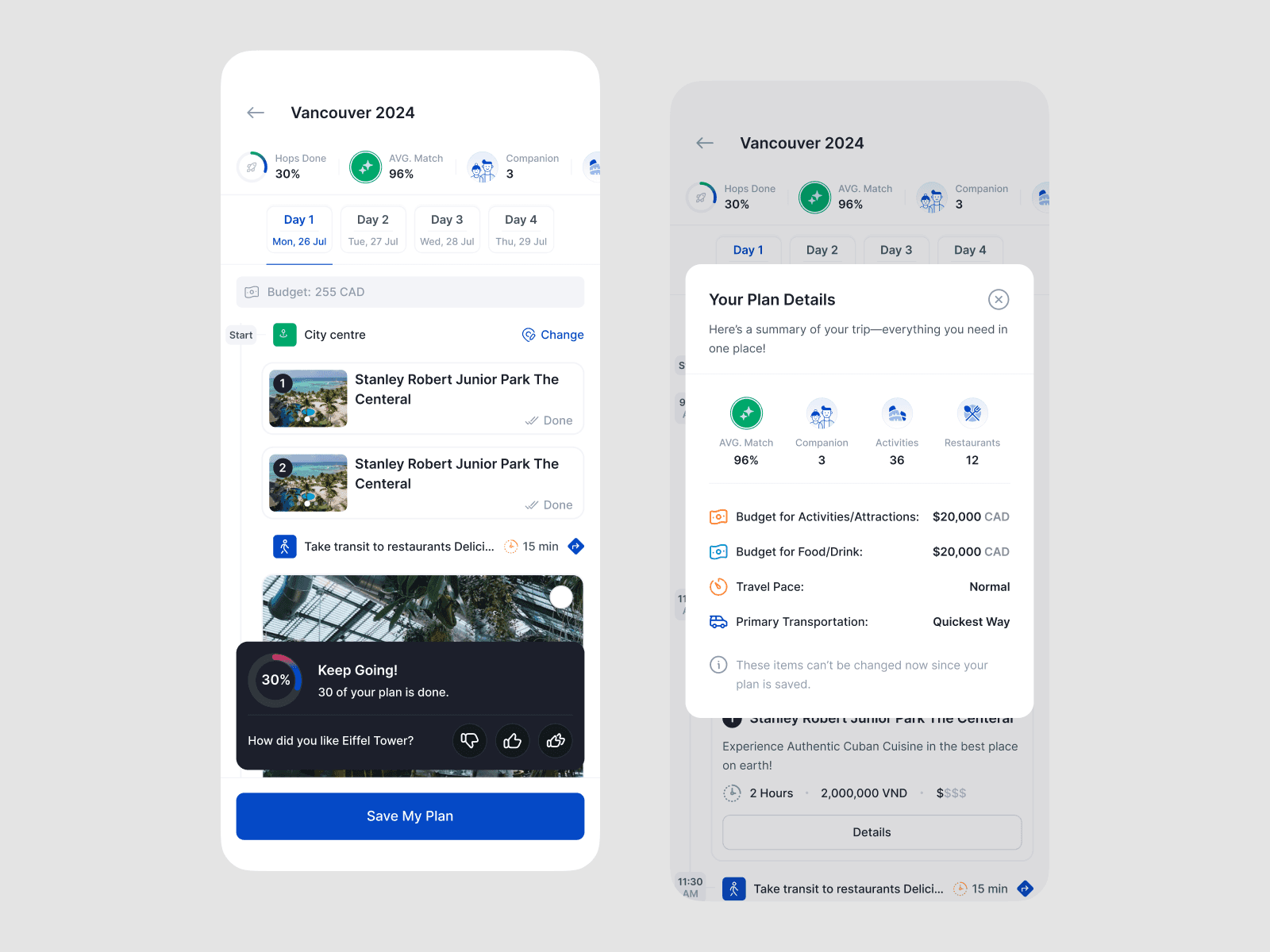
- Selected activities are organized into a practical itinerary.
- The responsive experience supports planning across desktop, tablet, and mobile.
The design balanced guidance with flexibility. Instahop helped reduce the work of planning while allowing travelers to review, adjust, and shape the final journey themselves.
Impact & Results
The experience reduced the effort required to research and organize a trip by bringing key planning decisions into one focused flow. Travelers could create plans that better matched their budget, preferences, group, transportation, and starting point.
By considering activities, routes, transportation, and budget together, the experience created opportunities to reduce avoidable spending and unnecessary travel. Recommendations from local hosts and tour guides also helped users discover hidden gems and more authentic experiences beyond common tourist options.
For the core guided itinerary flow, simplifying early discovery and booking steps reduced completion time by 25%. The flow first encouraged users to create a plan with only essential information, then moved non-essential questions to later stages where users could refine their itinerary.
We also designed an embeddable itinerary-planning widget for partner businesses. By shortening the widget flow and moving non-essential questions after plan creation, plan creation among widget users increased from 9% to 12%. This gave partners a simple third-party tool they could integrate into their own service for guests and customers.
The main outcomes were a more focused planning process, more relevant recommendations, better budget alignment, and a stronger foundation for measuring recommendation engagement, transport efficiency, and local-experience discovery. Exact savings should be validated by comparing comparable itineraries created with and without Instahop.
Summary
Instahop reframed travel planning as more than searching for places. It combined personalization with local knowledge to help travelers spend less time researching, make better use of their budget, and spend more time experiencing their journey.